Why Bermuda Lawns Die Before They Ever Fill In
Bermuda grass is only tough in full sun. Here is the myth that kills new lawns, the yards where it thrives, and the ones where it slowly gives up.
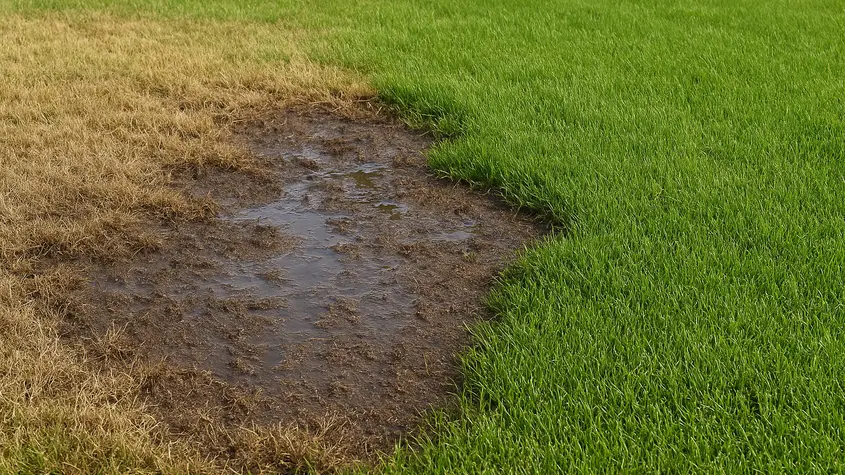

Bermuda grass is a warm season perennial that spreads sideways instead of growing in tidy upright clumps. It pushes out runners above the soil, called stolons, and runners below the soil, called rhizomes. That double spreading habit is why a healthy Bermuda lawn can close a small bare spot on its own, and also why it creeps into flower beds, gravel and driveway cracks.
The plant runs on a heat clock, not a calendar. It wakes up when soil temperatures climb past roughly 65 degrees, hits full stride when air temps sit between 80 and 95, and shuts down into a tan, straw colored dormancy once soil drops below about 55. Dormant Bermuda is not dead Bermuda. It is asleep, holding energy in its crowns and rhizomes, waiting for warmth to come back.
That one fact confuses more homeowners than anything else in the yard. People see brown in November, assume the lawn is dying of thirst, and start soaking it or feeding it, and that is usually where the story of a thinning patch quietly begins.
Seeded Common Versus Hybrid Sod
Not all Bermuda is the same plant. The type you buy sets the ceiling for how good your lawn can ever look.
- Common Bermuda: grown from seed, coarser blades, very aggressive, inexpensive, forgiving of rough soil and rough treatment.
- Improved seeded varieties: finer texture and better density than common, still available in bags of seed.
- Hybrid Bermuda such as Tifway 419, TifTuf and Celebration: sold only as sod or sprigs because it does not produce reliable seed. Denser, finer, and much hungrier for mowing and light.
So if a website offers you a bag of hybrid Bermuda seed, that is a warning sign, not a bargain.
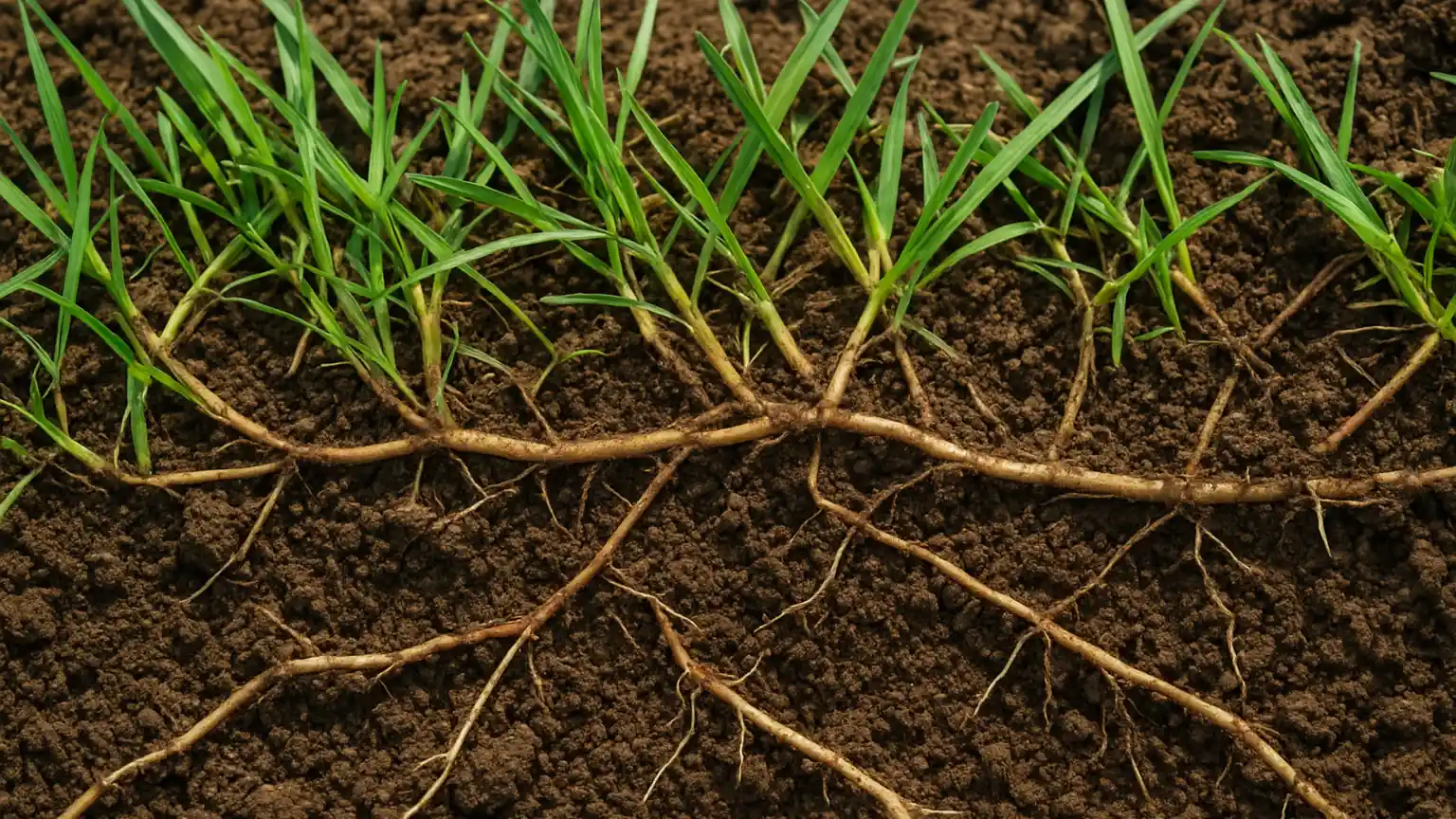
On paper, the range is generous: roughly USDA zones 7 through 10, and pretty much anywhere summers are long and hot. Phoenix, Las Vegas, Dallas, Tulsa, Atlanta, Charleston. In the desert metros it is the default recommendation from the crews that made the cut on local shortlists, and for good reason. Bermuda handles heat, drought stress, salty soil, compacted clay and constant foot traffic better than almost any lawn grass sold in the country.
But the climate on a weather map is not the climate in your yard. Bermuda lives or dies by microclimate: the shadow your roofline throws, the canopy of a mature ash tree, a six foot block wall, a north facing strip between two houses that sees ninety minutes of direct sun in January.
“Most of the failed Bermuda lawns we get called out to were installed in the wrong twenty feet of the property, not the wrong city,” says Marisol Reyes, turf and irrigation lead at Desert Vine Landscaping. “The sod itself was fine. The sunlight never was.”
Yard Signals Worth Reading Before You Plant
- Strong fit: six to eight hours or more of direct summer sun, open exposure, soil that drains, kids and dogs actually using the space.
- Marginal fit: four to five hours of direct sun, filtered light under high pruned trees, the outer edge of a patio cover.
- Poor fit: dense tree canopy, north side yards, walled courtyards, cool and humid coastal summers, mountain towns with short warm seasons.
Here is the cruel part. A poor fit does not fail loudly. The sod goes down, greens up beautifully for one season, thins out in year two, and the homeowner reacts with more water and more product, which is how the unkillable Bermuda myth takes hold and where an extra care routine starts causing its own damage.
Pro Tip: Run a Sun Audit Before You Buy Anything
Pick a clear day in June or July, when trees are fully leafed out and shadows are at their shortest, then photograph the yard at 9 a.m., noon, 3 p.m. and 6 p.m. Lay the four photos side by side and mark every zone that stays in direct sun through at least three of them. Those are your Bermuda zones. Everything else is a different plan.
Do the same audit in October if you can, since low winter sun and long shadows are what decide how fast each area greens up in spring. Homeowners comparing installers in the desert Southwest often start with the crews that made the cut for grading and irrigation work, since a sun map is only useful if the person installing the lawn respects it.
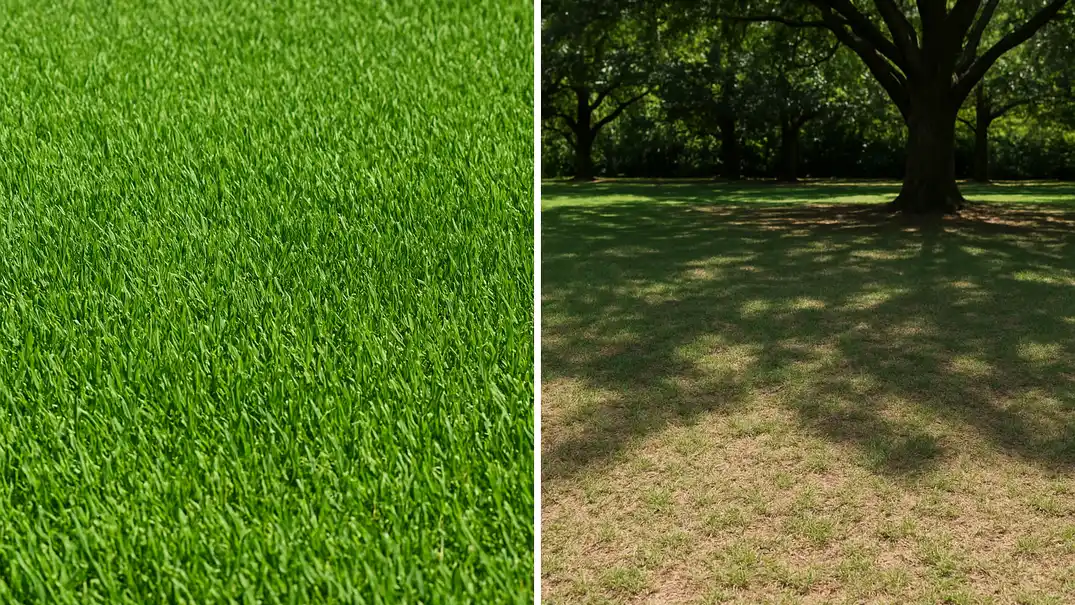
So here it is. The myth that kills more Bermuda lawns than anything else is the belief that Bermuda is tough enough to grow anywhere. It is tough, genuinely tough. But toughness is what Bermuda does with leftover sunlight, not a replacement for it.
Think of your lawn as running a sunlight budget. Every new stolon, every rhizome, every root and every blade is paid for with light captured that day. Full sun creates a surplus, and Bermuda spends that surplus on aggressive spreading and deep roots, which is the toughness everyone brags about. Cut the light down and the surplus disappears. The plant has no shade gear to switch on, because it never evolved any. It simply stretches, spaces its nodes farther apart, stops making runners, and starts spending root reserves it cannot replace.
How the Myth Kills a Lawn Step by Step
- Year one: sod is installed in a yard with four hours of sun and looks fantastic, coasting on energy the sod farm already stored in it.
- Spring of year two: green up is slow, uneven and patchy in the shaded half.
- Summer of year two: the owner waters more, the soil stays damp, and weeds plus disease move into the thin spots.
- Fall of year two: the mower drops lower to force thickness, the turf scalps, and recovery stalls.
- Year three: bare soil, spurge, nutsedge, and a homeowner convinced Bermuda grass is overrated.
None of that was a bad grass. It was a good grass on a starvation budget. Get the light right and Bermuda becomes almost unkillable. Get it wrong and no amount of hose time or fertilizer will pay the difference, which is the exact trap that shows up when "extra care" habit quietly thinning takes center stage in the next part of this series.
Pro Tip: Design for the Shadiest Spot, Not the Sunniest
Most yards are not all sun or all shade, so stop trying to force one grass across both. Keep Bermuda in the open zones and give the dim corners something that actually wants low light: a shade tolerant turf where your climate allows, or a mulched bed, decorative gravel, stepping stones, a groundcover, or a seating area.
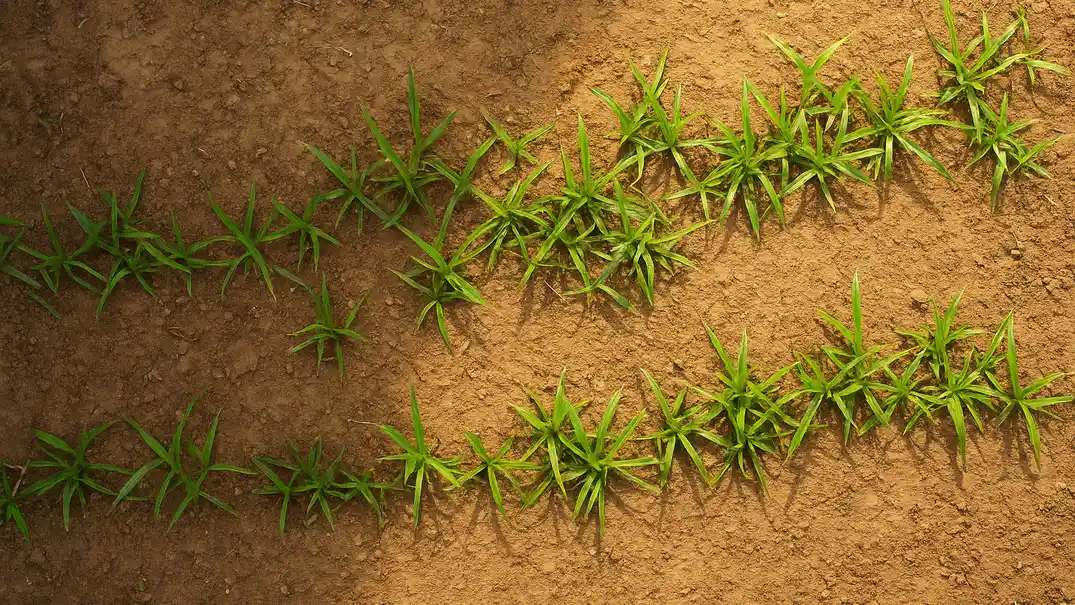
This is also the fix for the strip that never fills in no matter how many times you reseed it. Owners keep reseeding, keep watering, keep blaming the summer, and the same bald ribbon returns, which is the pattern behind thinning patch every homeowner blames on thousands of lawns every year.
The Lawn Was Never the Problem
Bermuda grass is a creeping, heat loving perennial that measures its year in soil temperature and pays for every inch of spread with sunlight. It comes as coarse common seed or fine hybrid sod, it browns out in winter without dying, and it earns its reputation for durability only in yards that give it six hours of direct sun or better. Where those conditions exist, it is one of the best value lawns in the country. Where they do not, it thins out on a slow, quiet timeline that looks like bad luck, bad seed or bad weather.
Which means the most important lawn work you will ever do happens before planting day, with your eyes and a clock instead of a shovel. Walk the yard, count the real hours of sun in each section, and be honest about the shaded strips that will never win. That single hour of observation prevents years of frustration, wasted water and reseeding that never takes. Once the sun math checks out, the rest of the game comes down to habits, and that is where the next part picks up: the well meant mowing, watering and feeding routines that thin healthy Bermuda from the top down.
Pro Tip: Plant on the Grass Calendar, Not Yours
Bermuda establishes when soil is warm and rising, not when the garden center puts pallets out front. Wait until soil temperature sits at 65 to 70 degrees and climbing, which usually means late spring through early summer in most Bermuda country. Seed dropped into cool spring soil rots or sits dormant while weeds take the ground first.
Give any new planting at least 90 warm days before your typical first frost. That window is what lets the roots and rhizomes bank enough energy to sleep through winter and come back strong. Plant late in the fall and you are asking a young lawn to survive dormancy with an empty tank, and the spring after tells you exactly how that gamble went.