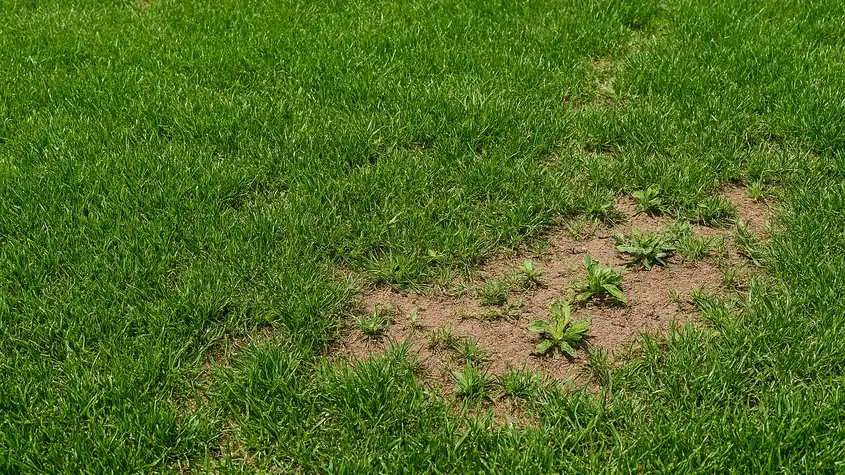
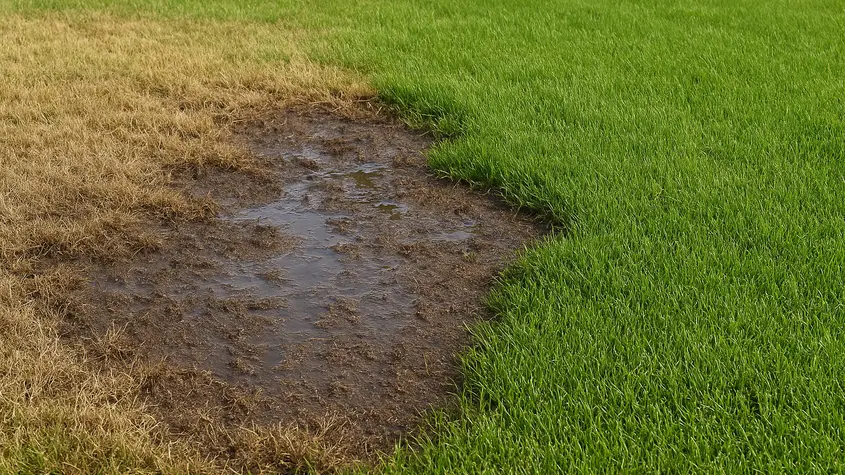
Your Thin Bermuda Patch Isn't Thirsty, It's Trampled
The bare spot in your Bermuda lawn usually has nothing to do with rain. Here is how to read the real cause and fix it before spring green-up.

In the last part of this series, we looked at how "extra care" habits like heavy watering and low mowing can quietly thin healthy turf. Now we finish the file with the single complaint we hear most: a shrinking, pale patch that the homeowner swears is a drought problem.
It almost never is. Drought hits a Bermuda lawn evenly. It fades whole zones, not one oval near the gate or one strip beside the driveway. When damage has edges, something physical made those edges.
First, Confirm You Actually Have Bermuda Grass
Half of all bad lawn advice starts with a misidentified grass. Bermuda has a look you can learn in about thirty seconds on your hands and knees.
- Above-ground runners. Flat, wiry stems called stolons crawl sideways along the soil and root at each joint.
- Fine, pointed blades. Narrow leaves, usually gray-green to deep green, with a small fringe of hairs where the blade meets the stem.
- Seed heads shaped like tiny fingers. Three to seven spikes fanning out from one point at the top of a stalk.
- It sprints in heat. Peak growth arrives when daytime temperatures sit in the 80s and 90s, not in spring.
- It goes tan in cold. Full dormancy, not death, once soil temperatures fall.
If your grass tufts up in clumps and never sends out runners, you may have fescue or a mix, and every rule below changes. Understanding that starting point is exactly why one bermuda grass myth matters before you touch a single fertilizer bag.
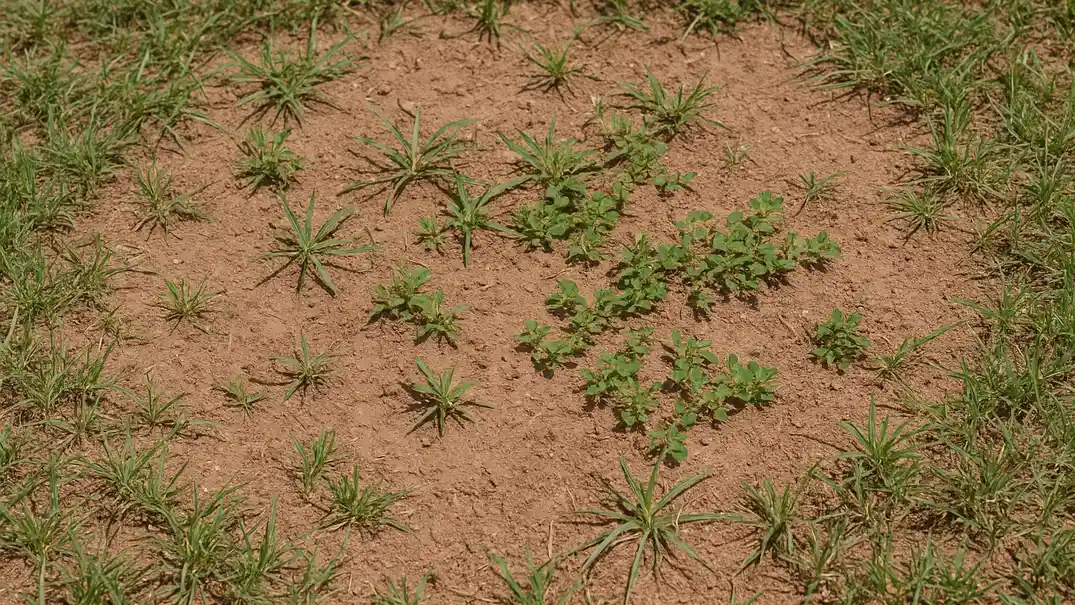
Once you know it is Bermuda, the thin patch becomes readable. Bermuda repairs itself by spreading sideways. So a patch that is not filling in is telling you that something is blocking the spread, not that the lawn needs a longer sprinkler run.
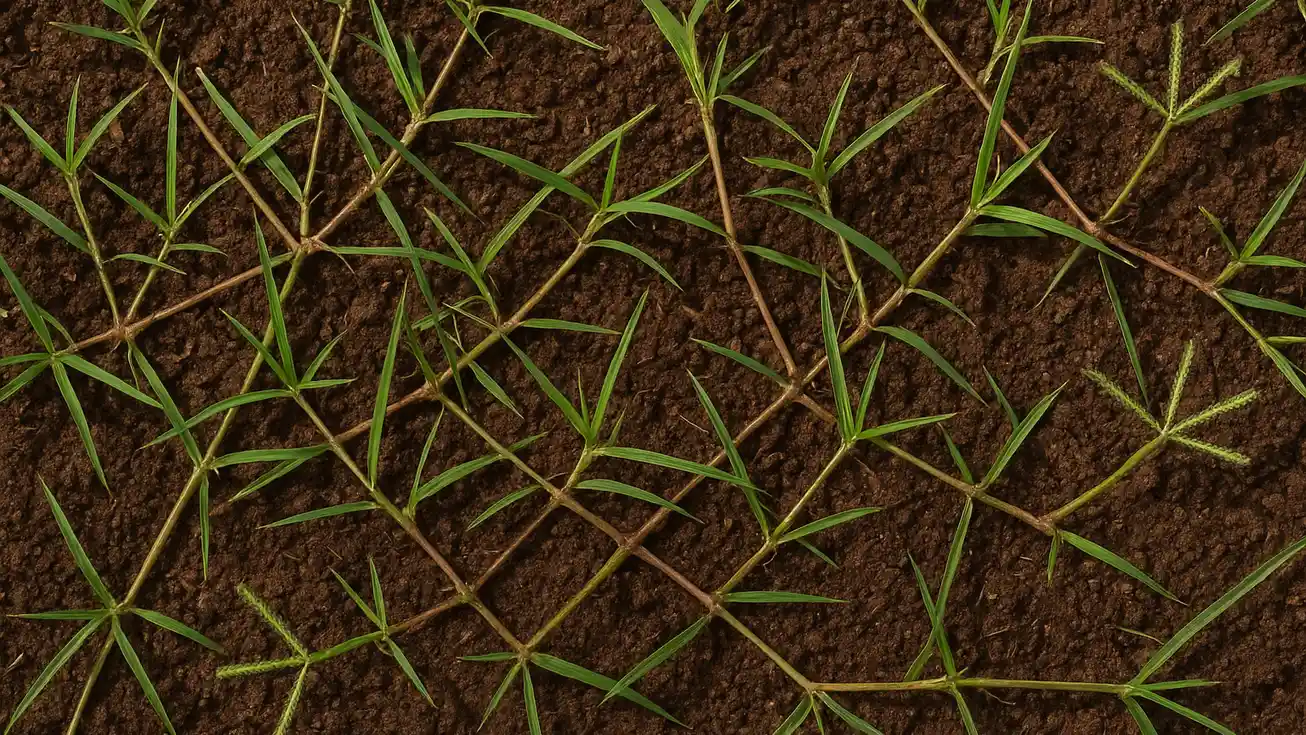
Bermuda spreads with stolons above the soil and rhizomes below it. Both need three things to advance: sunlight, loose soil, and room. Take away any one of them and the runners slow down or die back, and the open ground gets claimed by spurge, crabgrass, or nutsedge within weeks.
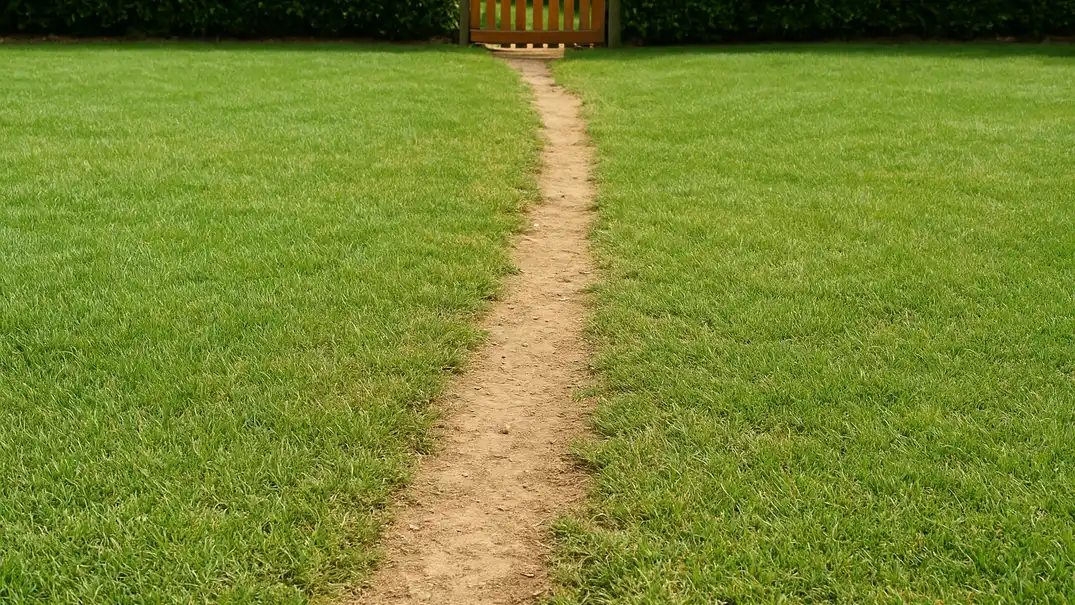
Here is the habit behind thinning patches, and it is so ordinary that nobody suspects it. Repeat foot traffic. The same path from the side gate to the trash cans. The dog's favorite loop along the fence. Kids cutting the same corner off the patio. Every pass presses the soil tighter. Compacted soil holds less air, drains poorly, and physically stops rhizomes from pushing through. The grass thins, the homeowner adds water, the compacted ground stays soggy, and the roots suffocate instead of recovering.
The Usual Suspects Behind a Thin Bermuda Patch
- Traffic and compaction. Narrow, oddly straight thin areas that follow a route people walk.
- Shade creep. A tree that added four feet of canopy over five years. Bermuda needs roughly six to eight hours of direct sun and will surrender below that.
- Uneven irrigation. One clogged or tilted head starves a wedge of lawn while the rest gets plenty.
- Scalping on a high spot. The mower deck bottoms out on a mound and shaves that spot to the crown every week.
- Buried debris. Leftover concrete, gravel, or a compacted builder's pad a few inches down.
- Pet urine. Small dark-ringed dead circles rather than a broad fade.
Test compaction with a screwdriver. Push it into the healthy turf, then into the thin patch. If it slides into one and fights you in the other, you found your answer without spending a dollar. That same test is what separates a real drought call from a soil problem, and the specialists at the habit behind it run it before adjusting any controller.
<<Pro Tip: Audit the Sprinklers Before Blaming the Sky
Set six shallow cans across the thin patch and run the zone for fifteen minutes. Uneven water in the cans means uneven turf, no matter how long you run the system.
"Most of the dry looking patches we get called out for are pattern problems, not supply problems, and a five minute can test usually finds a tilted head or a blocked nozzle," says Marisol Vega, irrigation systems lead at Desert Vine Landscaping, who notes that adjusting one head often outperforms adding minutes to the whole schedule.
Bermuda communicates through color and texture. Learning the vocabulary saves you from treating the wrong problem.
Yellowing
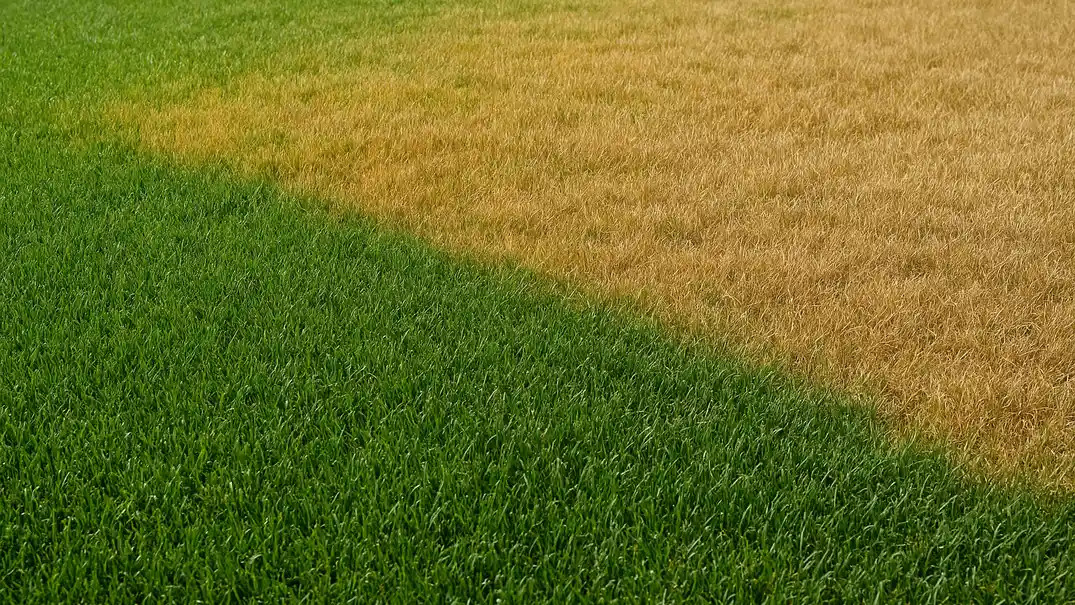
Pale yellow across the whole lawn in mid summer usually means nitrogen is running low, since Bermuda burns through it during peak growth. Yellow between the veins while the veins stay green points toward iron, common in high pH or alkaline soils. Yellow in low spots after a week of watering is almost always too much water, not too little. "That kind of yellow is a distribution problem nine times out of ten, and the fix is usually a nozzle rather than a longer run time," says Marisol Vega, irrigation systems lead at Desert Vine Landscaping.
Scalping
That instant tan or straw color right after mowing means you cut into the stems below the leaf canopy. Bermuda tolerates a short cut, but only when you get there gradually and mow often. Cutting a third of the height at once, then waiting ten days, is the fastest way to build a thin lawn, which ties directly into "extra care" habit quietly thinning and the mowing rhythm that fixes it.
Off-Season Browning
A uniform tan lawn from late fall through early spring is dormancy and it is completely normal. Do not fertilize it, do not water it heavily, and do not panic. Two clues tell you it is dormant and not dead:
- The crowns at the base of the plants stay firm and slightly pale green when you part the canopy.
- Runners tug back when you pull on them instead of lifting free like dry string.
Green patches inside a dormant lawn are usually cool-season weeds, not surviving grass. Mark them, because they will show you exactly where your bare ground is before spring even starts.
Pro Tip: Mow More Often, Not Lower
Bermuda thickens when you cut it frequently at a steady height. Removing no more than a third of the blade at a time keeps the plant feeding itself instead of scrambling to rebuild leaves.
If mowing every four or five days in peak season is not realistic, that is a fair reason to bring in help, and reviews of local crews like this roundup of firms that made the cut are a practical place to compare service schedules before you commit.
Repairing Weak Areas So They Stay Repaired
Patching Bermuda without fixing the cause just resets the clock. Work in this order and the repair holds.
Relieve the compaction first. Core aerate the patch and the ground around it during active summer growth, when the grass can knit back over the holes. Pulling plugs beats spike aerating, which pushes soil sideways and can make things tighter, so if you are hiring the job out it is worth asking which method a crew uses, since side-by-side write-ups of top Phoenix landscaping companies tend to separate the ones that pull cores from the ones that just punch holes.
Then remove the reason for the traffic. A stepping stone path, a gravel strip, or a shifted gate latch will do more for that patch than any product. Grass loses to shoes every time.
Give the runners something to grow into. Rake the surface lightly, top dress with a thin layer of sandy loam to level low spots, and keep the area lightly moist while stolons creep in from the healthy edges. In a warm month, Bermuda can close a small gap in three to five weeks on its own. For larger areas, plugs or sod pieces set into the patch beat seed, because they arrive with roots already attached.
Feed lightly and steadily. Small amounts of nitrogen every four to six weeks during the growing season keeps the runners moving. One giant spring application produces soft top growth and shallow roots.
Setting Up for Green-Up and Dormancy
The two hinge points of the Bermuda year are spring green-up and the slide into dormancy, and both reward patience.
Before green-up, drop the mowing height gradually to clear last year's tan canopy so sunlight reaches the soil and warms it. Hold your fertilizer until the lawn is genuinely growing, roughly when you have mowed real green clippings twice. Feeding a half-awake lawn feeds weeds instead.
Heading into cold weather, do the opposite. Stop pushing nitrogen four to six weeks before your first expected frost, raise the mowing height slightly to protect the crowns, and cut back watering to whatever keeps the soil from going bone dry. A potassium-leaning feeding late in the season supports root and crown strength without forcing tender growth that winter will punish.
Case Closed on the Patch You Kept Watering
Across these three parts, the through line has been the same. Bermuda grass is not fragile and it is not mysterious. It is a heat-loving, sun-hungry, self-repairing grass that tells you plainly what it needs, and most damage comes from good intentions applied at the wrong time. The myth that started the series set lawns up to fail. The extra care habits kept them thin. And the patch you blamed on drought was almost always a compacted, shaded, or scalped piece of ground quietly asking for room to spread.
So next time a spot fades, resist the urge to reach for the hose first. Get down at eye level, push a screwdriver into the soil, watch where the sun falls at two in the afternoon, and notice where feet go. The lawn has been writing the answer in color and texture the whole time. Read it once, fix the actual cause, and Bermuda will do what it does best, which is grow back over the evidence.
Pro Tip: Water Deep, Then Wait
Shallow daily watering trains roots to stay near the surface, which is exactly what makes a patch collapse the first hot week. Instead, water long enough to wet the top six inches, then hold off until the grass shows early thirst by dulling in color or holding footprints.
Two soakings a week in high summer beats seven light ones almost every time. Early morning is best, since evening watering leaves the canopy wet overnight and invites disease into the weak areas you are trying to rebuild.